
Fishing for Compliments
Fishing for Compliments
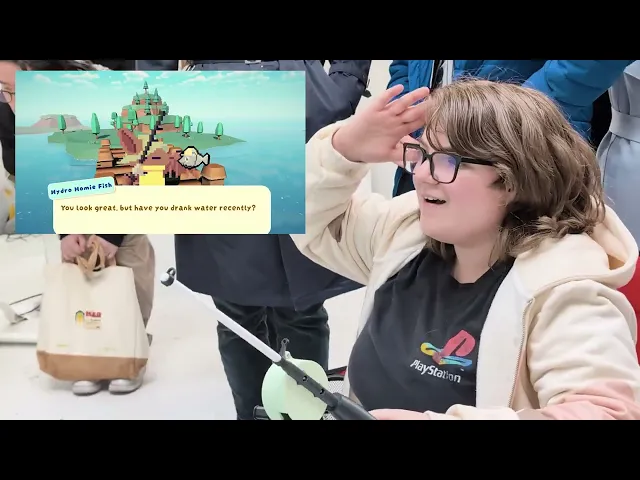
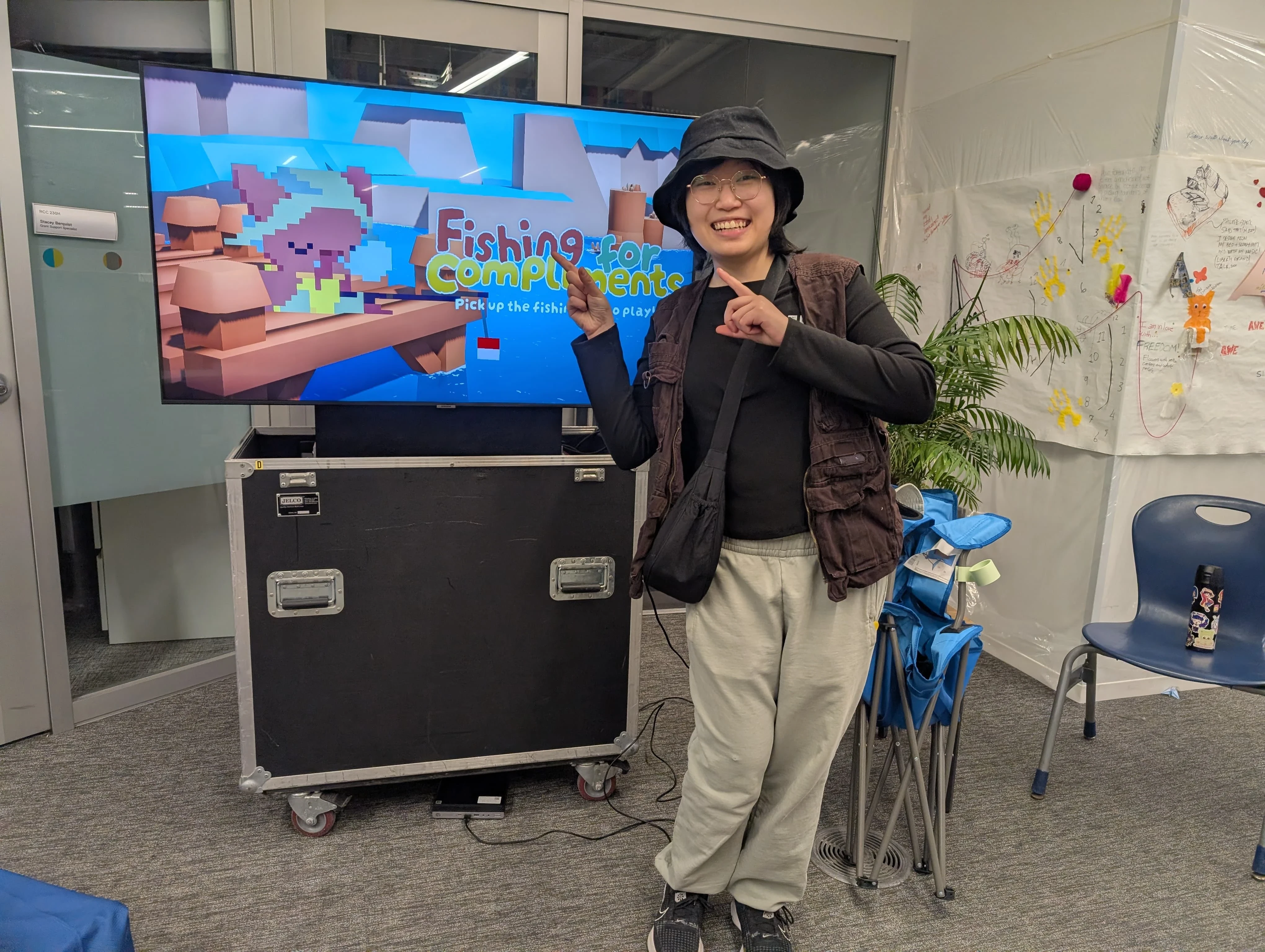
Life is stressful. Why not take a break to fish?
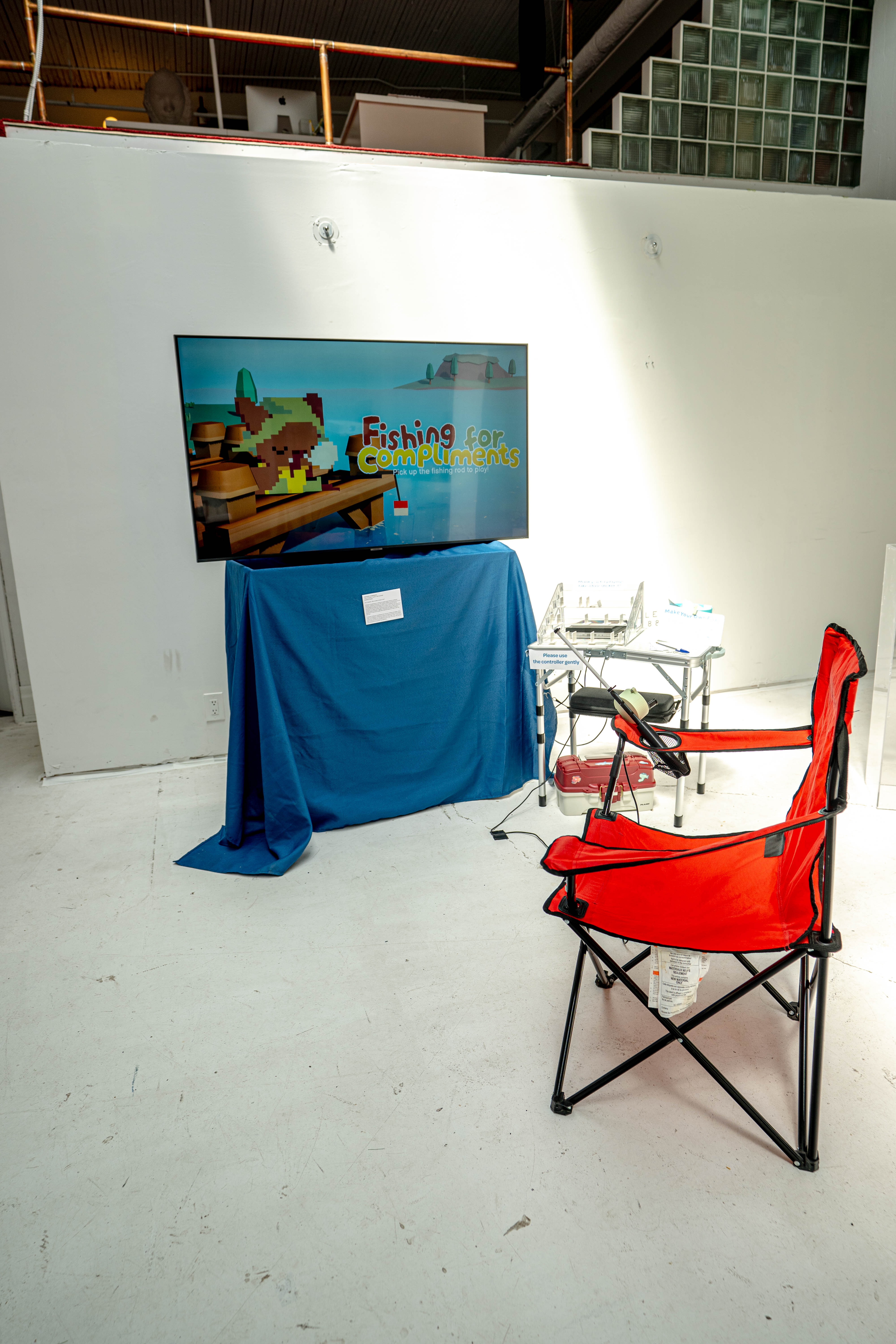
Fishing for Compliments is a fishing mini-game played with an unorthodox controller: a physical fishing rod!
Video games, especially artgames, often feel out of place when exhibited within a gallery.
I wanted to create a game which maintains the playful nature of the medium, but is not constrained by the lame presentation of "software on a laptop with a mouse".
The track for the game was created by the lovely David Park.
Life is stressful. Why not take a break to fish?
Fishing for Compliments is a fishing mini-game played with an unorthodox controller: a physical fishing rod!
Video games, especially artgames, often feel out of place when exhibited within a gallery.
I wanted to create a game which maintains the playful nature of the medium, but is not constrained by the lame presentation of "software on a laptop with a mouse".
The track for the game was created by the lovely David Park.
Controller
Controller
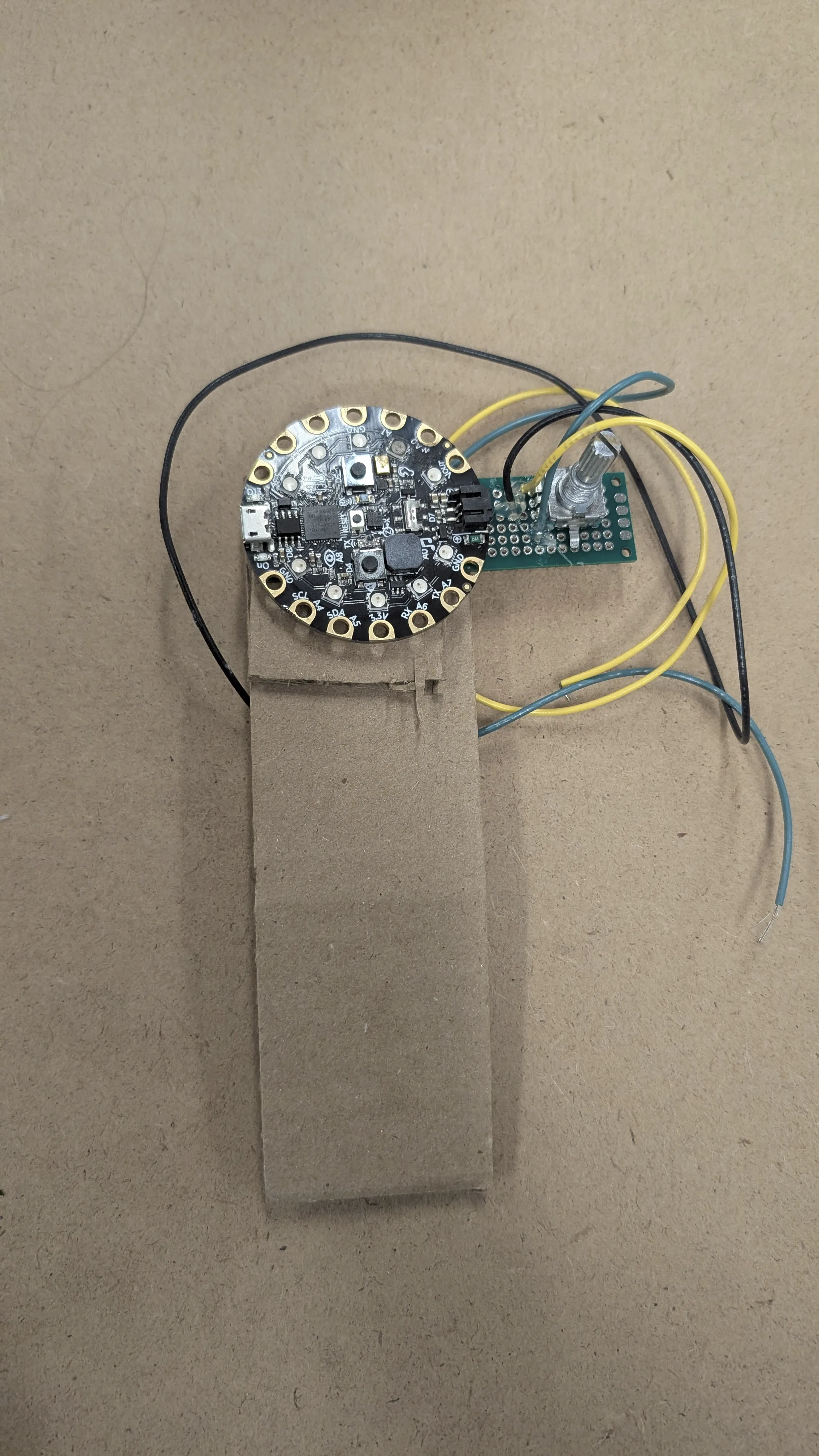
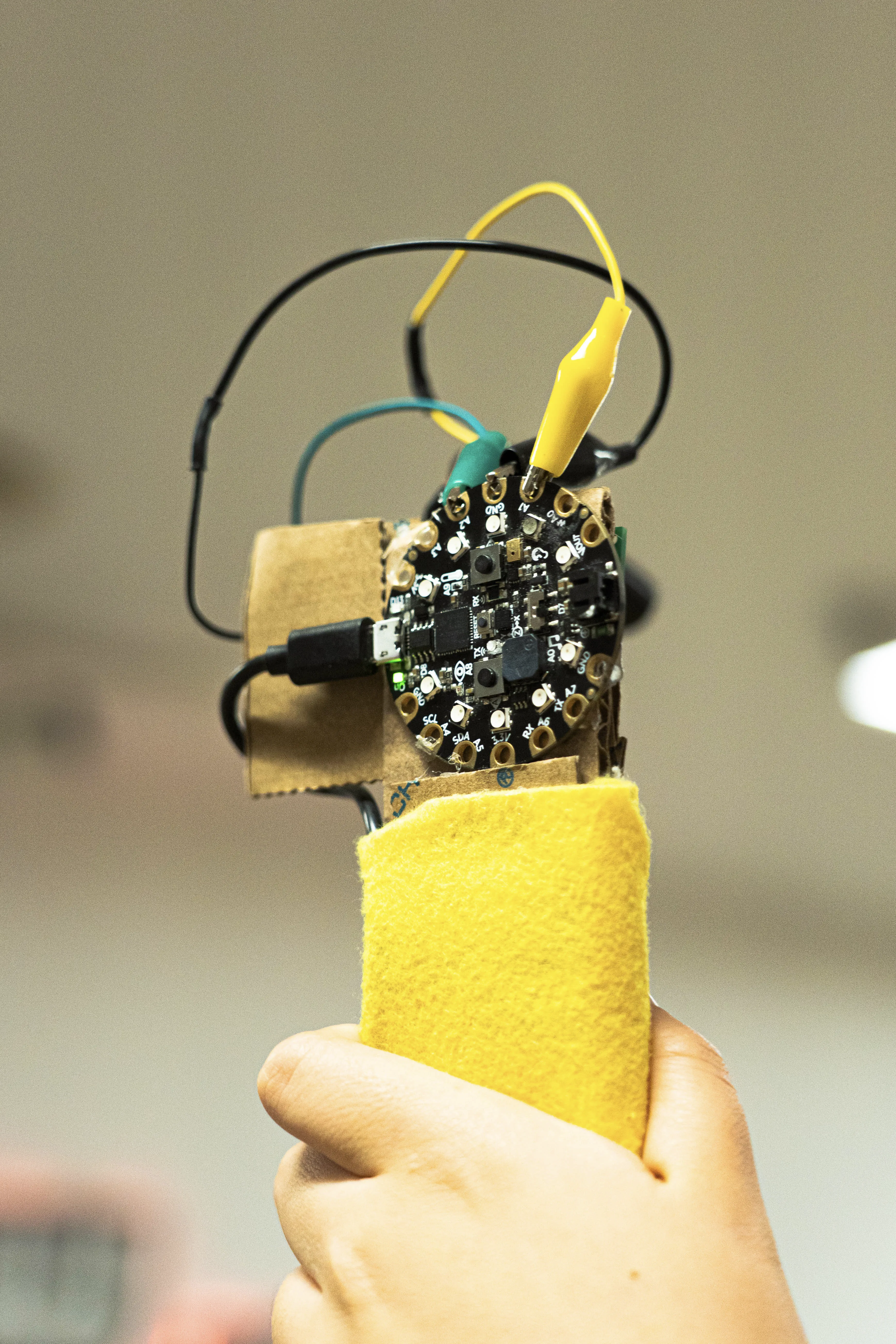
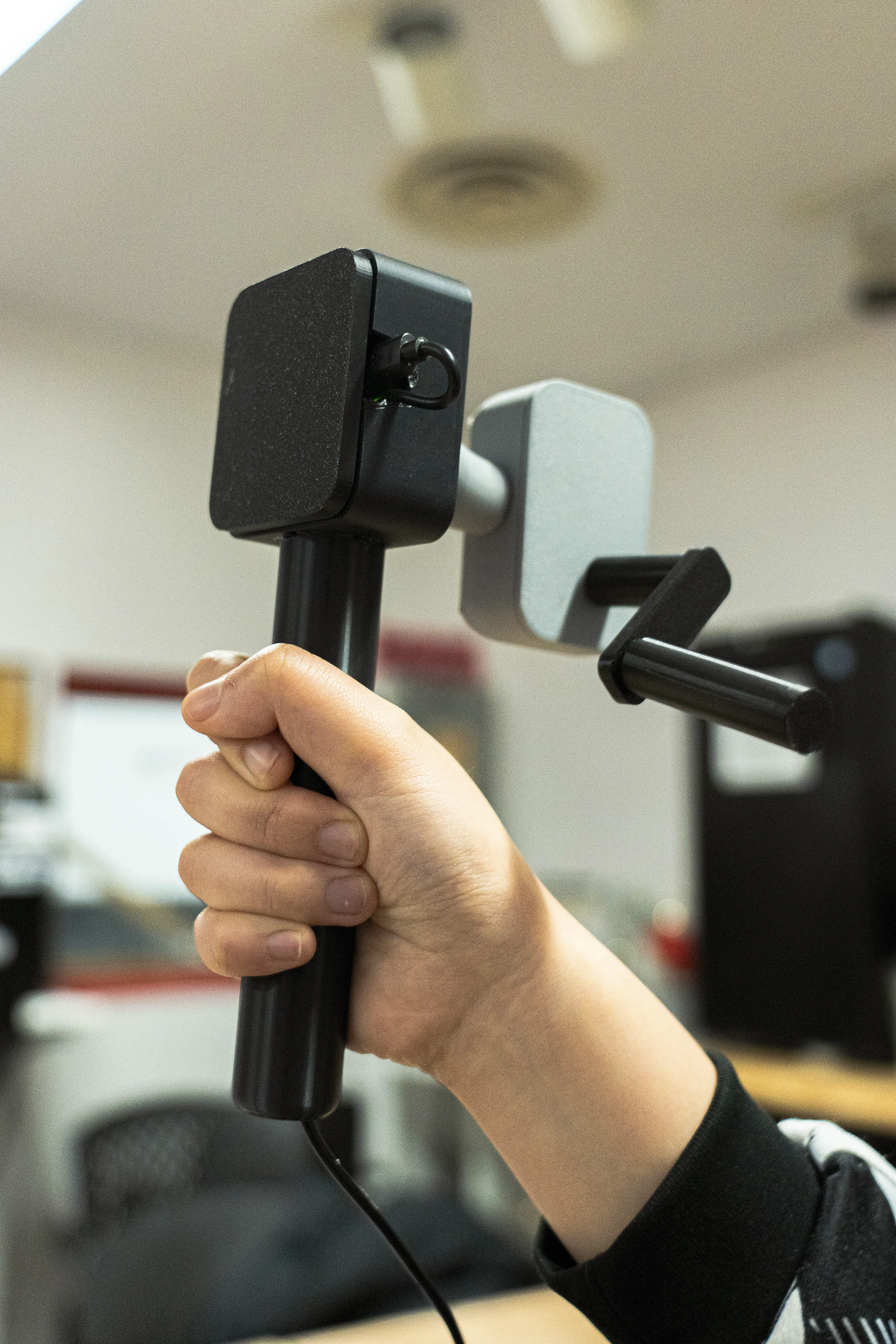
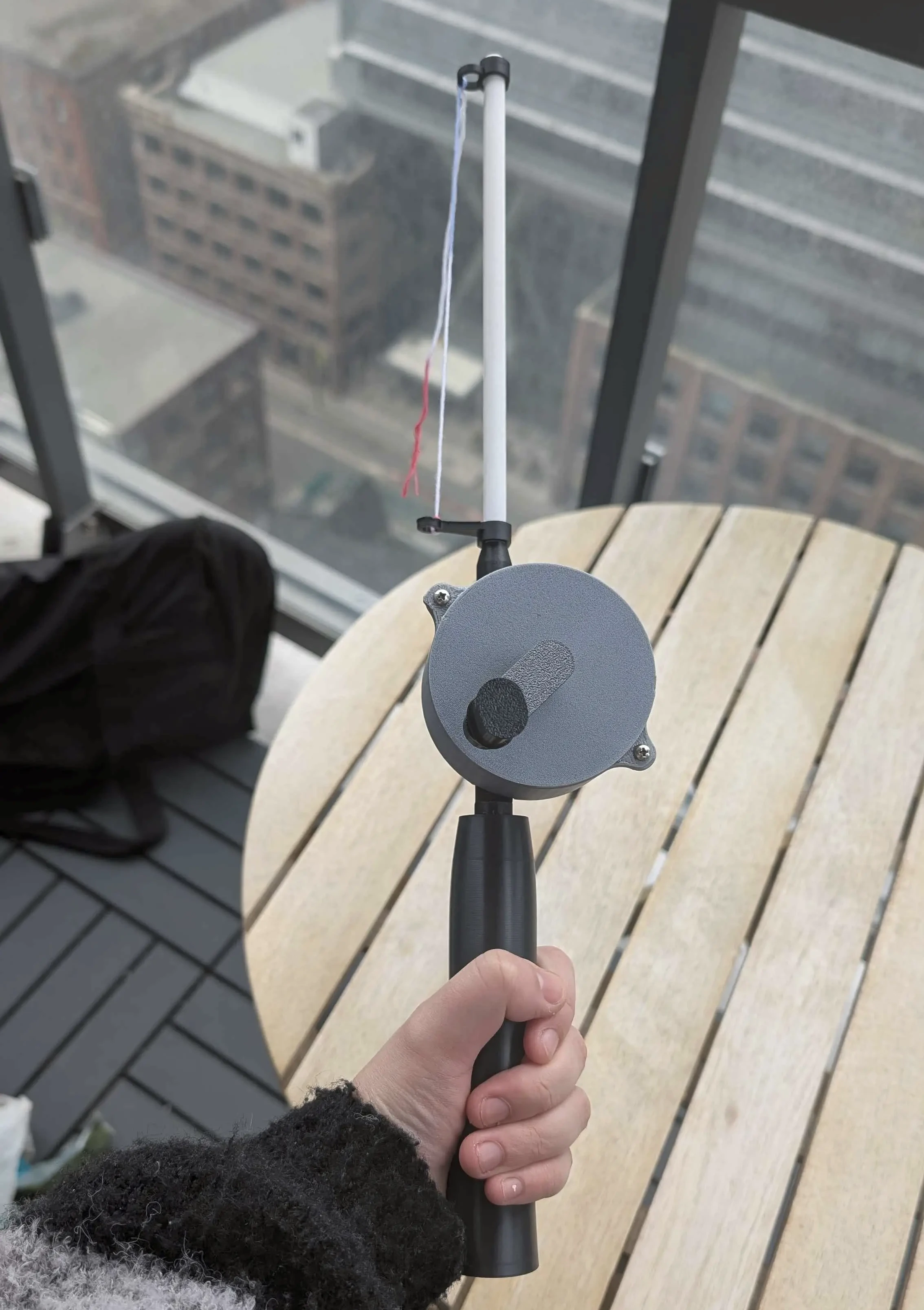
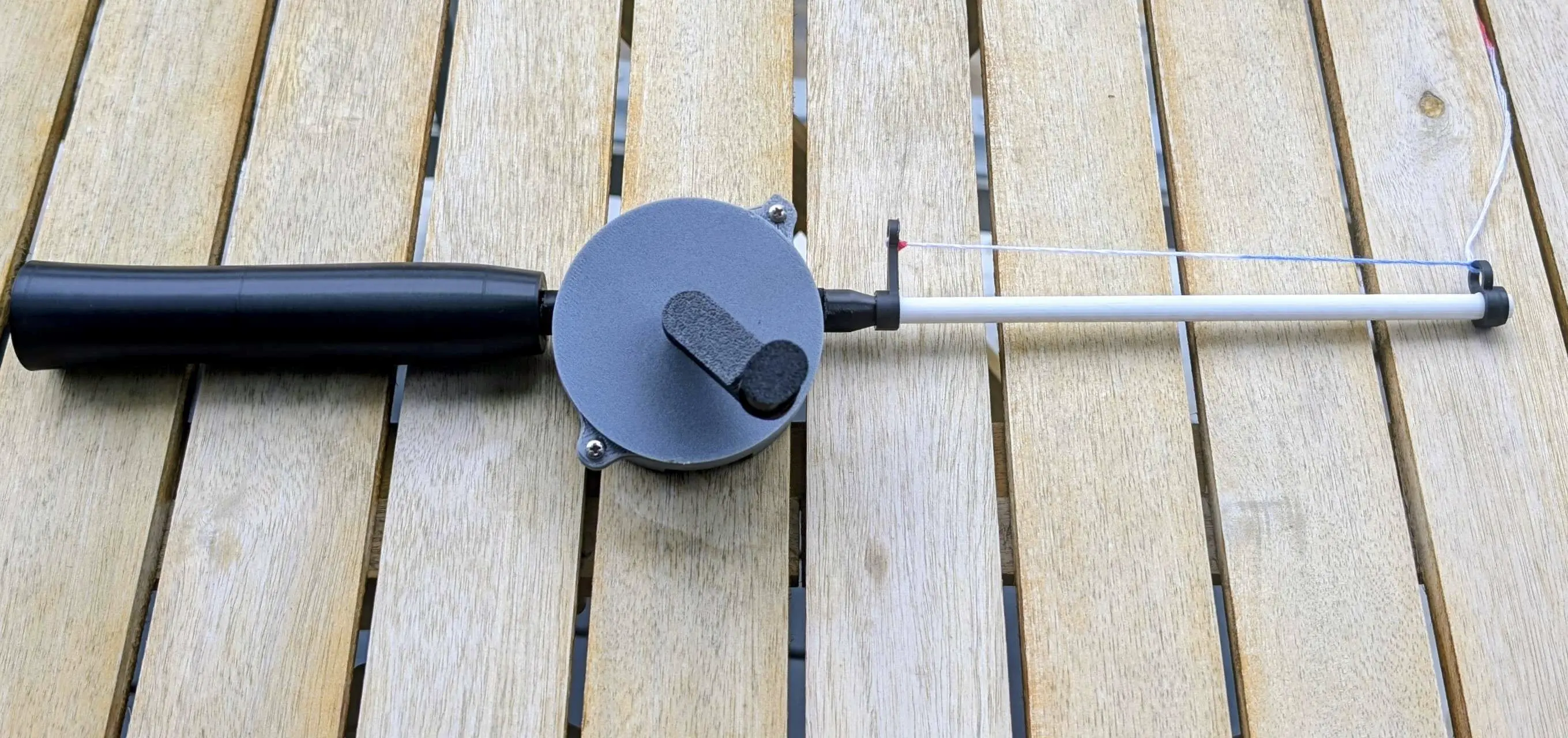
The controller grew from cardboard, to a wand thing, to a real (fake) fishing rod…
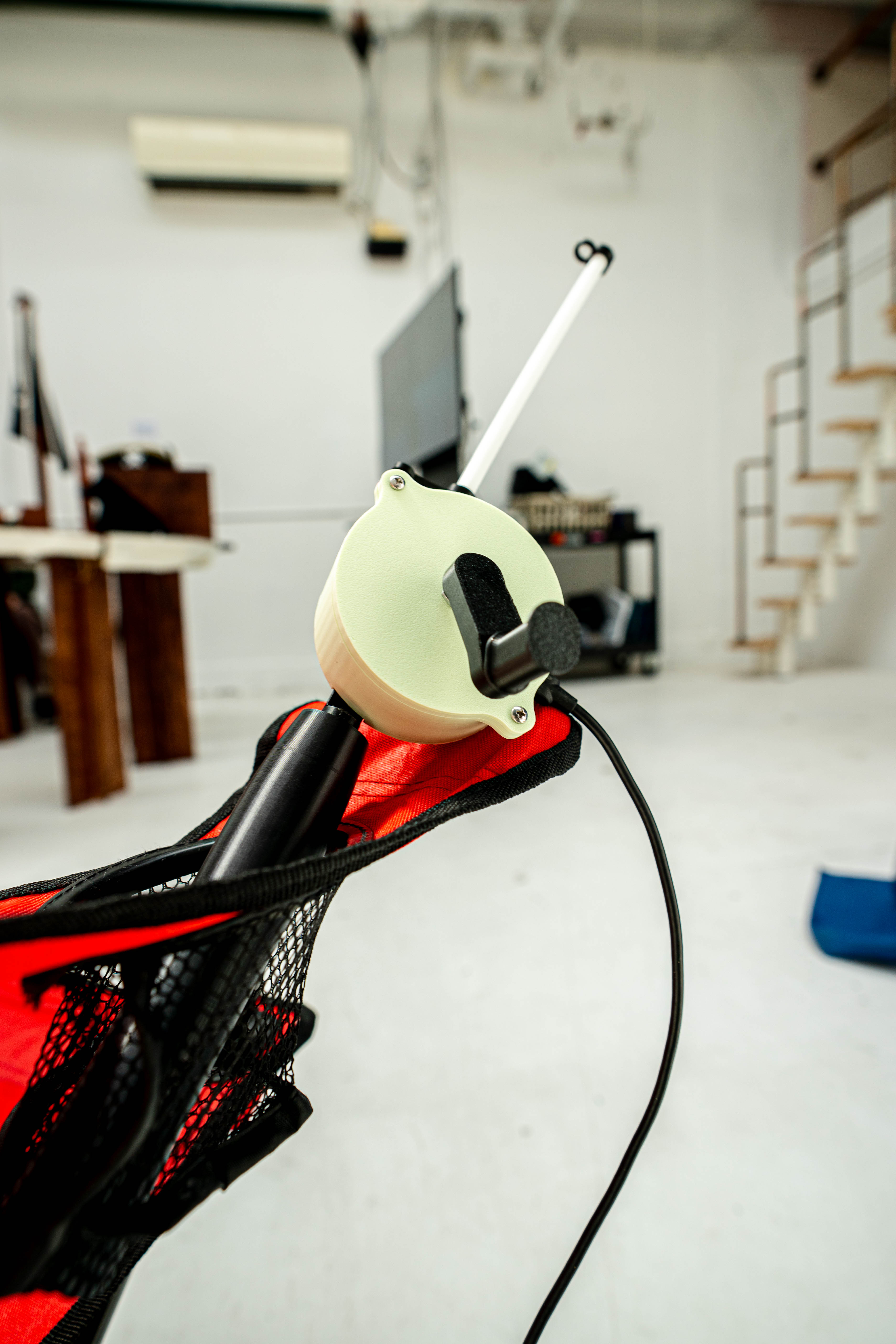
The controller was a labour of love from start to finish. It had to be compact, yet responsive, and sturdy, all the while resembling a fishing rod. The current iteration of the controller and game was born from tens of hours of play-testing, tweaks to sensor values, and (so far) 3 huge redesigns based on perceived user psychology.
The controller grew from cardboard, to a wand thing, to a real (fake) fishing rod…
The controller was a labour of love from start to finish. It had to be compact, yet responsive, and sturdy, all the while resembling a fishing rod.
The current iteration of the controller and game was born from tens of hours of play-testing, tweaks to sensor values, and (so far) 3 huge redesigns based on perceived user psychology.
The controller is powered by a Circuit Playground Express, which has a built in accelerometer. It also receives information from a mechanical rotary encoder. This information is sent to Unity with serial via a USB port, and parsed with the Ardity plugin.
Early on, I prioritized the game feel and mechanics of the game, as I wanted to find out whether it was actually fun to use a fishing rod as a controller.
The controller is powered by a Circuit Playground Express, which has a built in accelerometer. It also receives information from a mechanical rotary encoder.
This information is sent to Unity with serial via a USB port, and parsed with the Ardity plugin.
Early on, I prioritized the game feel and mechanics of the game, as I wanted to find out whether it was actually fun to use a fishing rod as a controller.
Art
Art
My god! He switched dimensions!
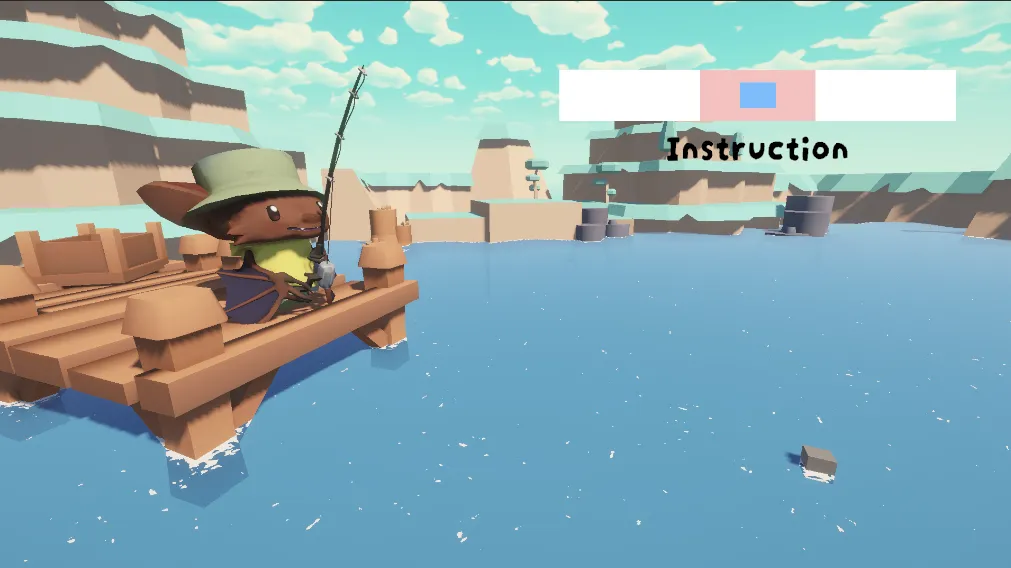
Otis the bat was originally a 3D model, but I realized quickly that I was not yet good enough at 3D animation to carry out the kind of animation I was envisioning.
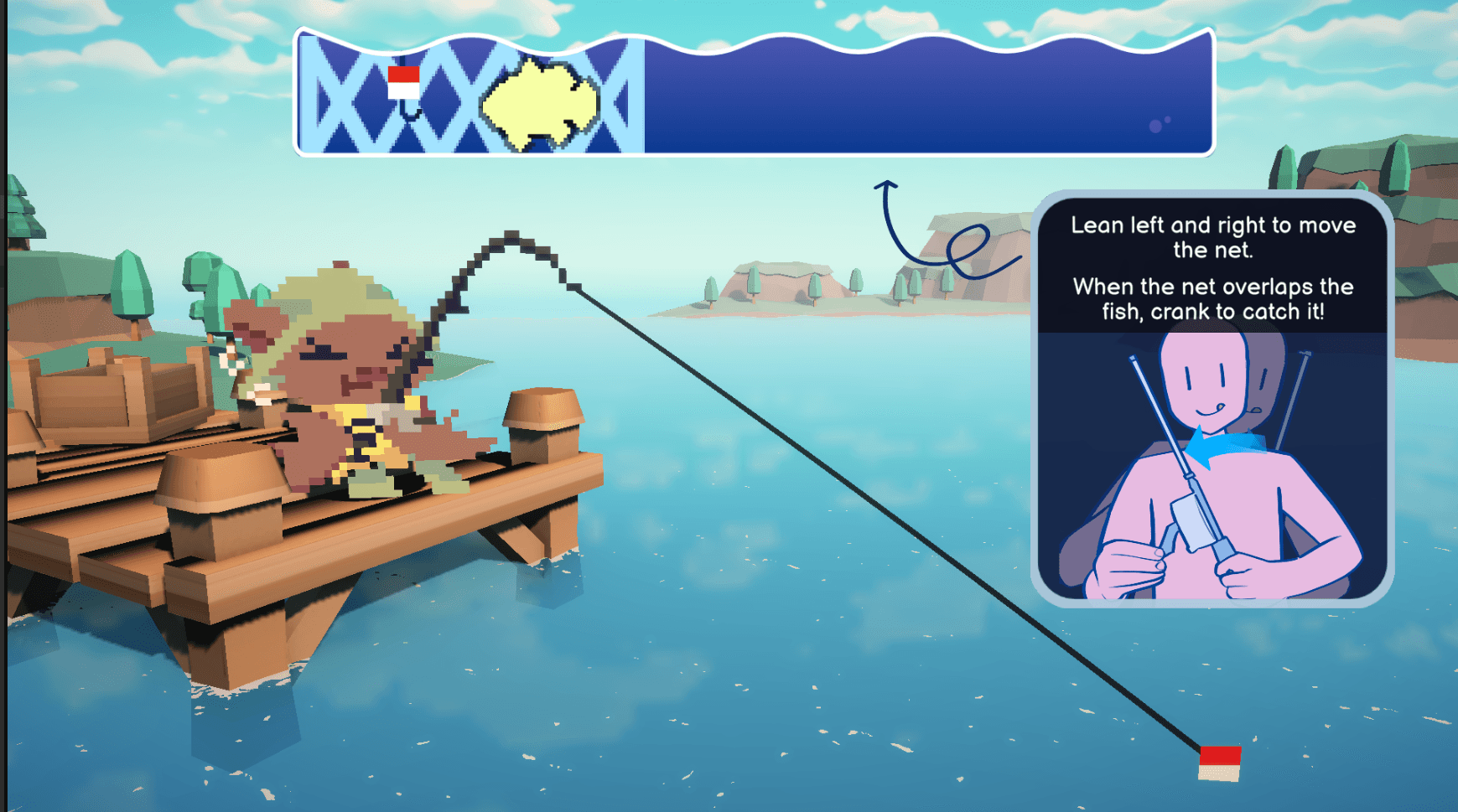
Thus, I pivoted to 2D pixel animation, a medium I was very familiar with. This turned out to be a fantastic choice for the expressiveness of the character.
My god! He switched dimensions!
Otis the bat was originally a 3D model, but I realized quickly that I was not yet good enough at 3D animation to carry out the kind of animation I was envisioning.
Thus, I pivoted to 2D pixel animation, a medium I was very familiar with. This turned out to be a fantastic choice for the expressiveness of the character.

For this project, I created 25+ original fish designs (and counting!) based on my favourite fish species, puns, media I enjoyed, and player contributions!



At every event, I had a "build your own fish" station where visitors could contribute fish ideas to be added to the game.
The following fish were all suggested by the wonderful players!
For this project, I created 25+ original fish designs (and counting!) based on my favourite fish species, puns, media I enjoyed, and player contributions!


A particular challenge I faced was players not understanding how much they needed to move the controller, and to what extent. Thus, I decided to design a cute and informative way to teach players how to play the game.
I researched Wii fishing games and their tutorials. Through my research, I learned that my UI elements needed to be text-light, image focused with small animations for motion, and a humanoid figure to mirror the movements.
Teaching the players the lean controls was a struggle. Many players were unsure of how much to lean, in what direction, etc. The first iteration helped somewhat, but similar issues persisted.
What really helped players understand was to create more sensitive feedback, with the fish net location in game mirroring how far the players leaned in real life. For example, if the player held the rod upright, the net would be dead centre.
The second change was adding a human to the tutorial. Players found it a lot more natural to mirror the pink tutorial character in iteration 2, rather than imagine the rod in perspective that iteration 1 prompted them to do.
The final tutorial graphics were both cute and practical, and opened up the game to be played entirely autonomously with no direct instruction, and unintentionally, opening up the game to non-English readers who could learn the controls without text!
At every event, I had a "build your own fish" station where visitors could contribute fish ideas to be added to the game.
The following fish were all suggested by the wonderful players!
A particular challenge I faced was players not understanding how much they needed to move the controller, and to what extent. Thus, I decided to design a cute and informative way to teach players how to play the game.
I researched Wii fishing games and their tutorials. Through my research, I learned that my UI elements needed to be text-light, image focused with small animations for motion, and a humanoid figure to mirror the movements.
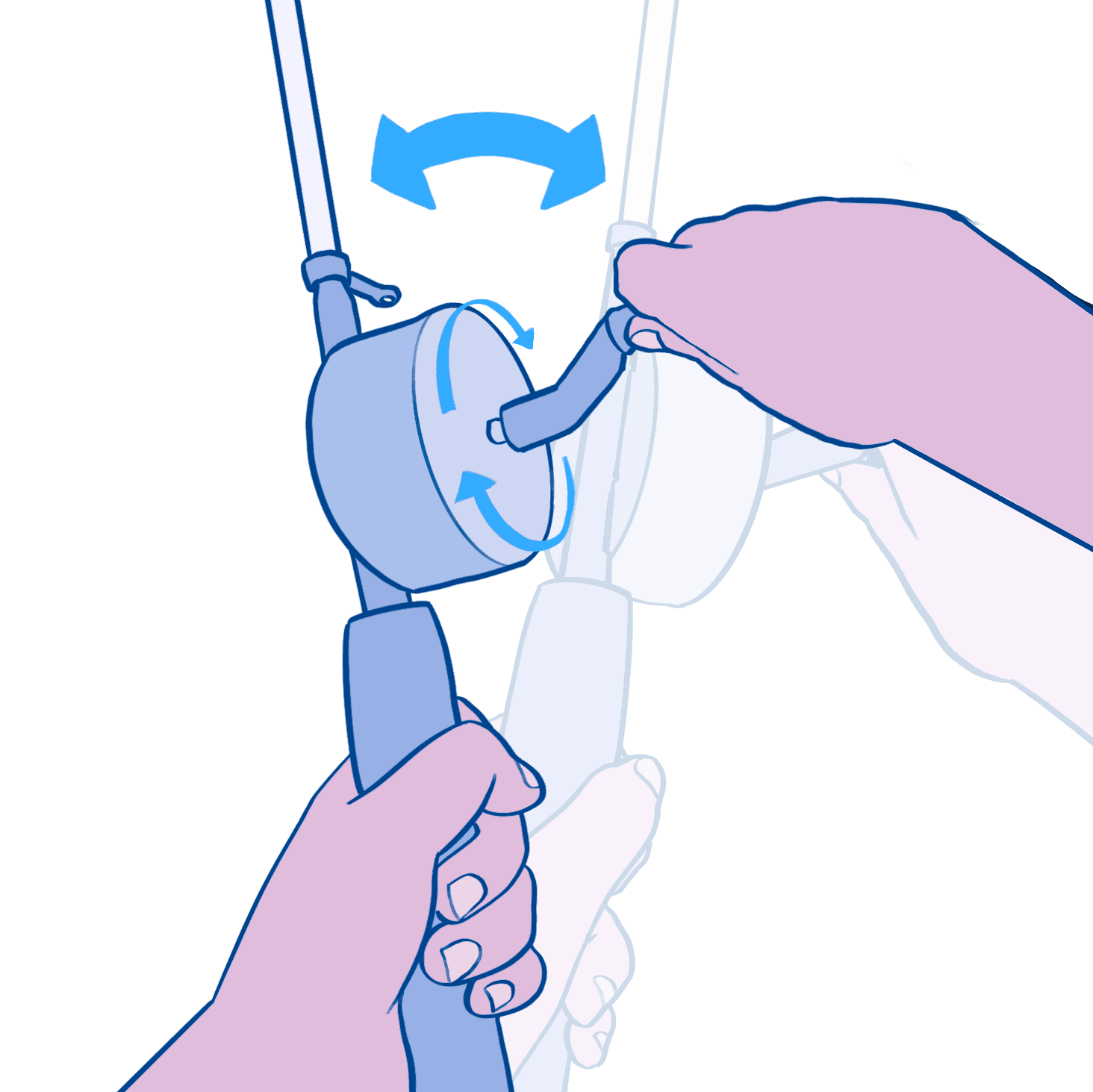

Teaching the players the lean controls was a struggle. Many players were unsure of how much to lean, in what direction, etc. The first iteration helped somewhat, but similar issues persisted.
What really helped players understand was to create more sensitive feedback, with the fish net location in game mirroring how far the players leaned in real life. For example, if the player held the rod upright, the net would be dead centre.
The second change was adding a human to the tutorial. Players found it a lot more natural to mirror the pink tutorial character in iteration 2, rather than imagine the rod in perspective that iteration 1 prompted them to do.


The final tutorial graphics were both cute and practical, and opened up the game to be played entirely autonomously with no direct instruction, and unintentionally, opening up the game to non-English readers who could learn the controls without text!
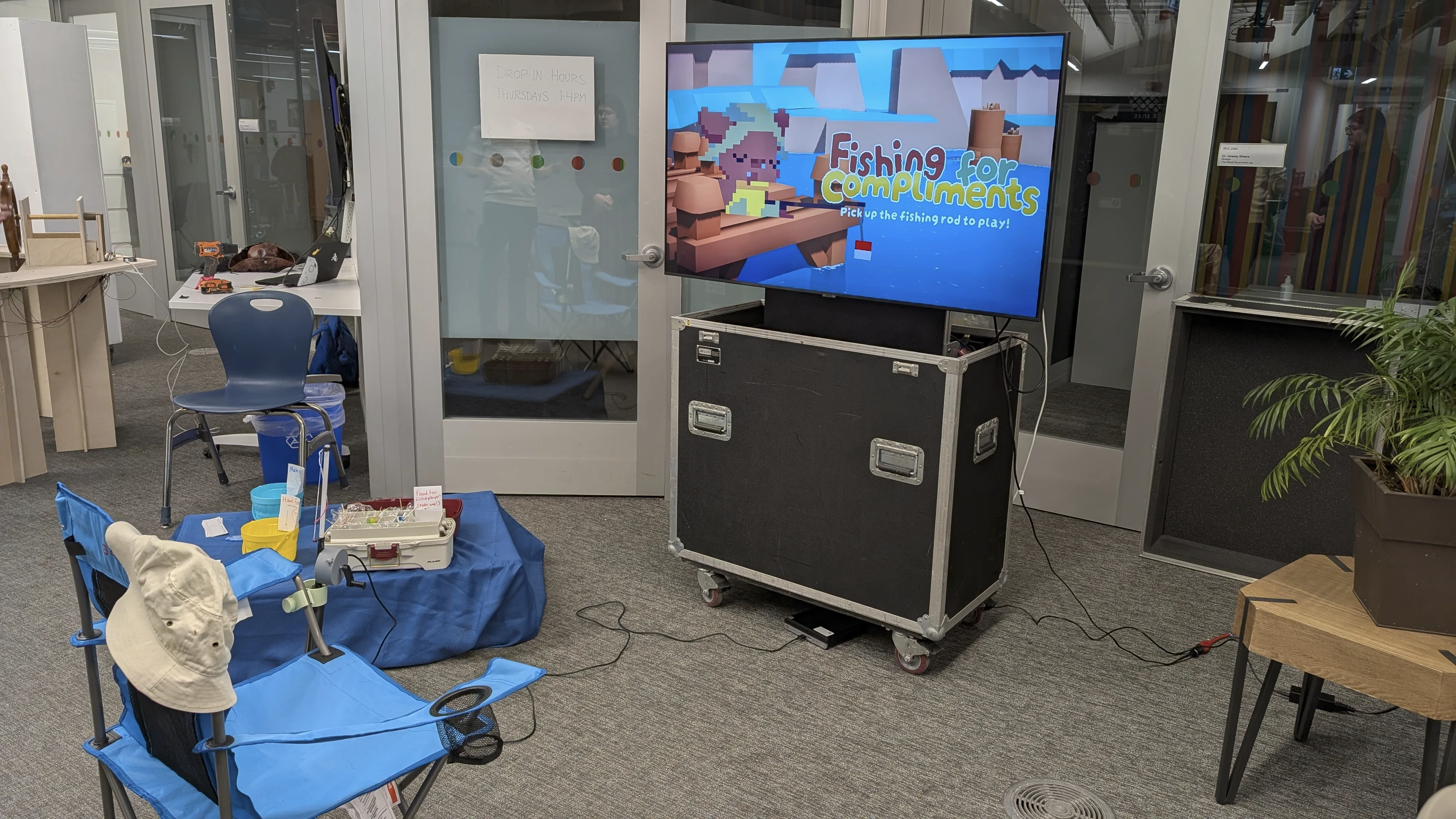
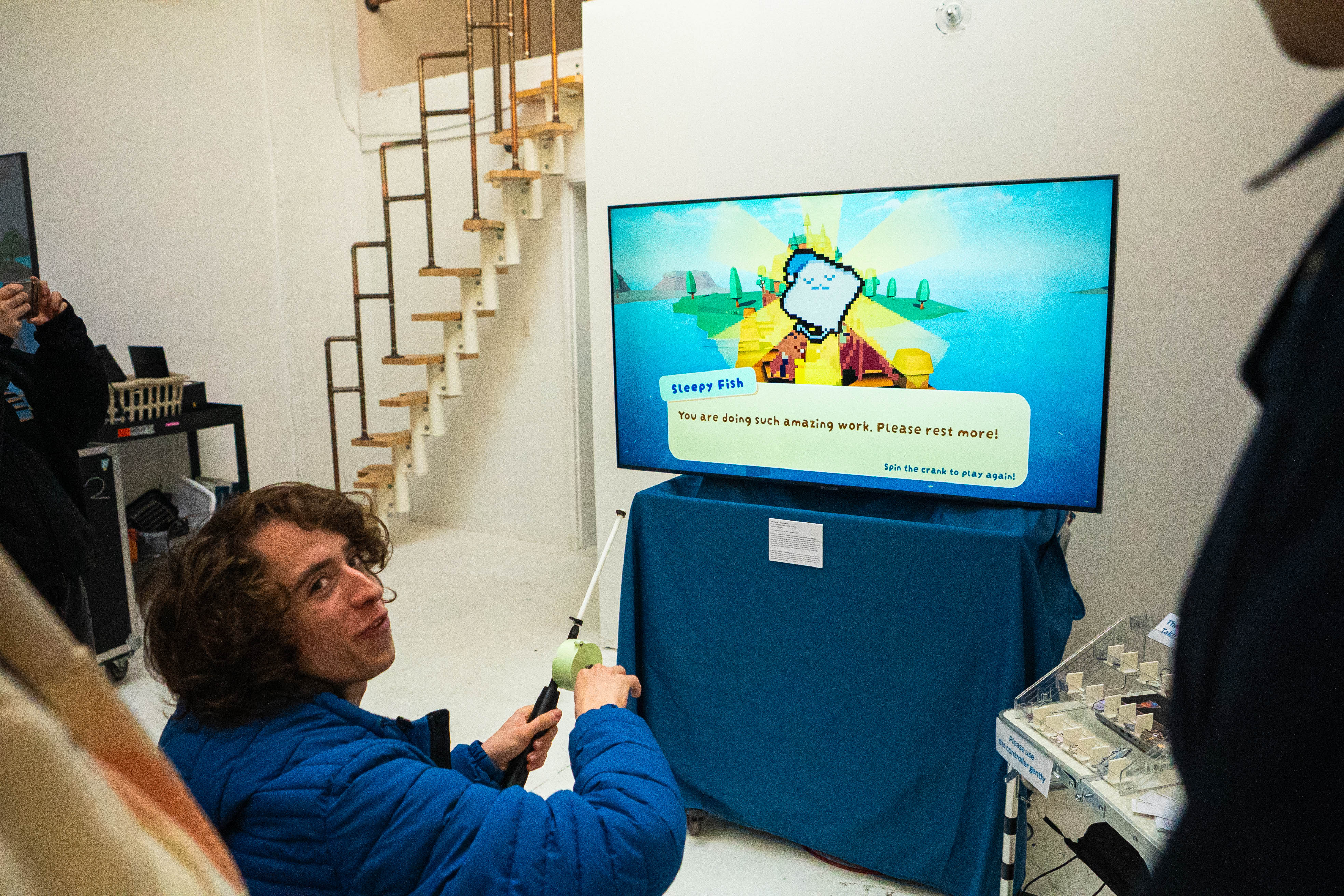
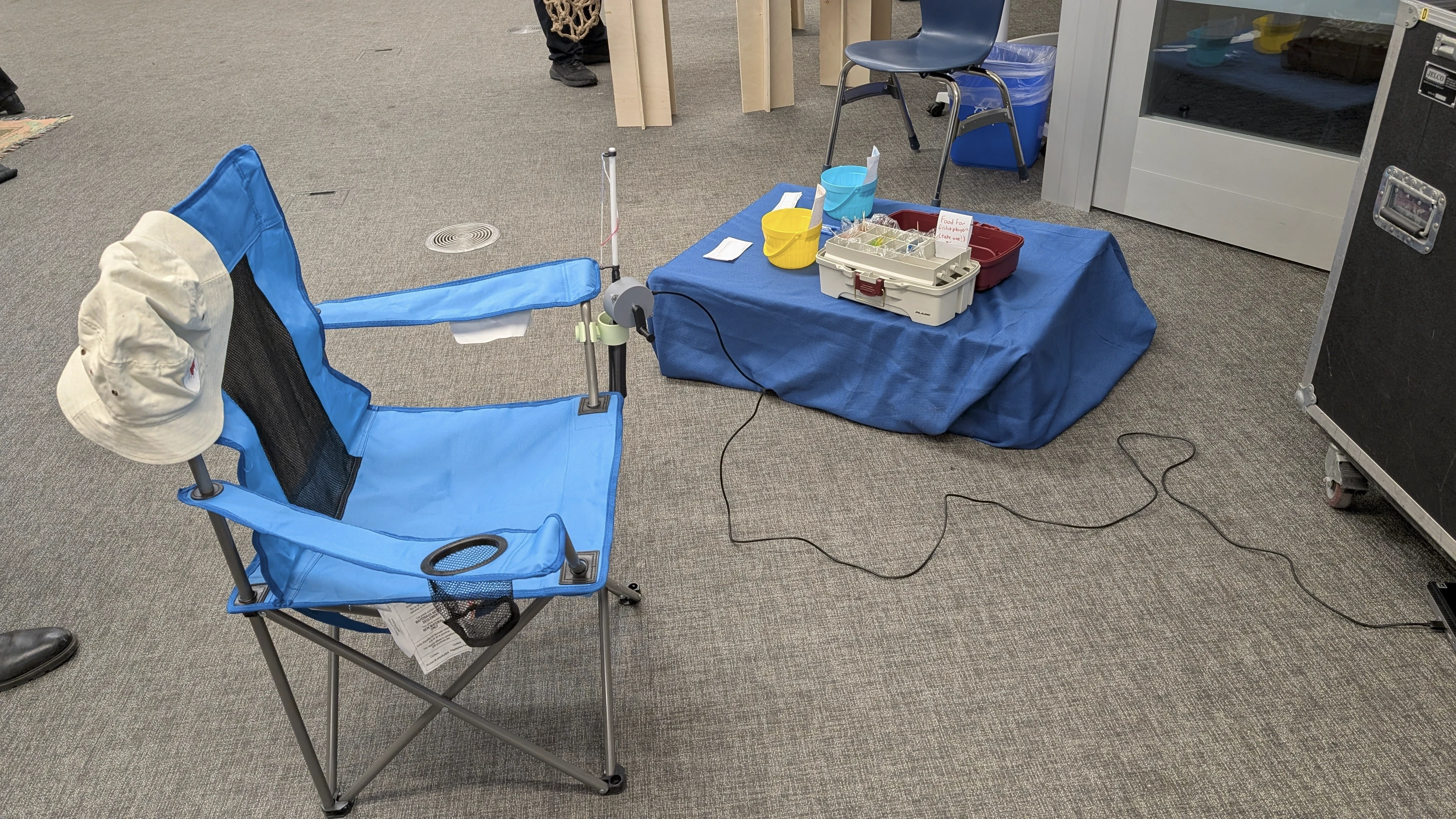
Dear visitor, I invite you to take a break with Otis, the adorable fishing bat. Cast a line, wait a few, and fish up a compliment for yourself. You deserve it.
Amazing plugins that made my life so much easier:
Ardity by Daniel Wilches
Trees by Kenney
Optimized Ropes And Cables Tool by Gogo Gaga
Stylized Skybox by Yuki2022
URP Stylized Water by BitGem